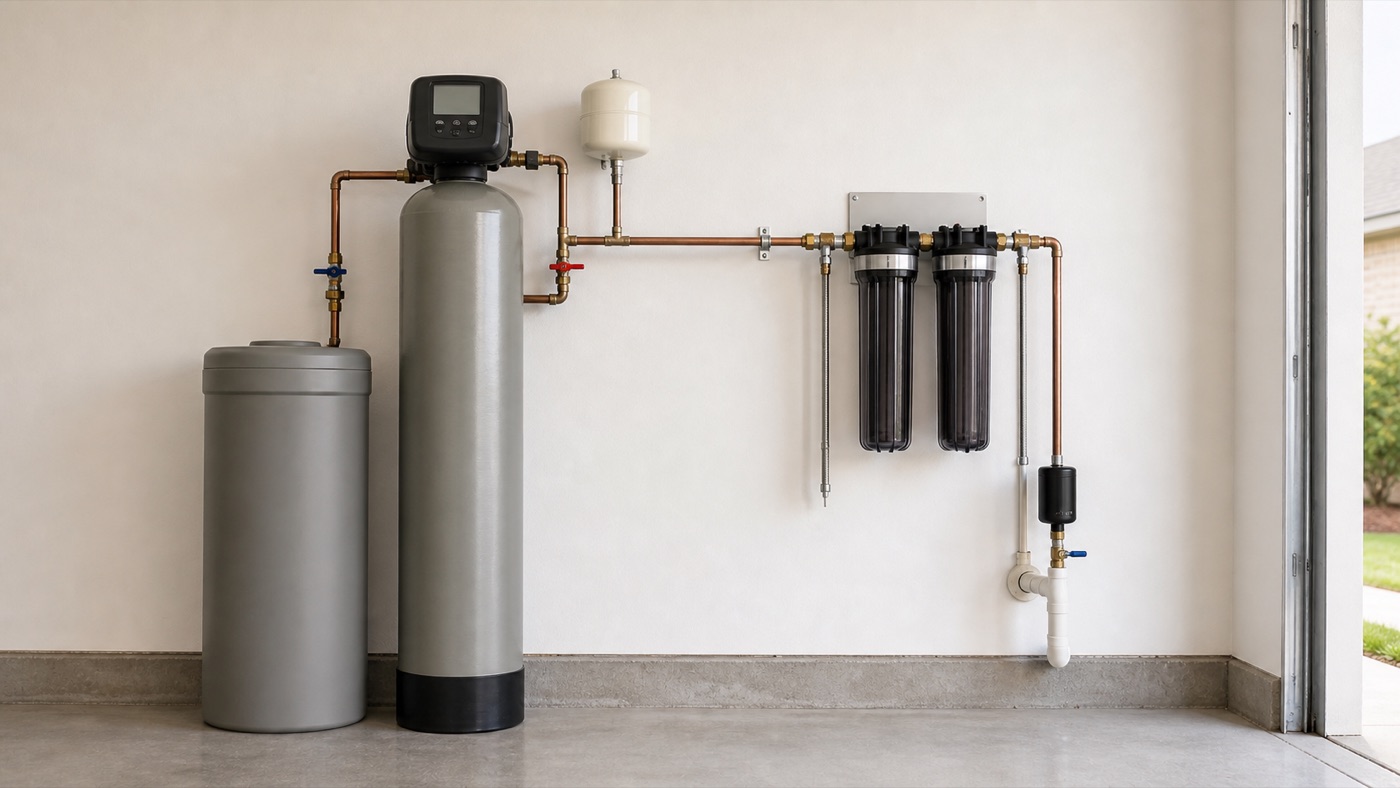
Use a softener for hardness and scale
Water hardness comes mainly from dissolved calcium and magnesium. USGS notes that hard water can leave residue, require more soap, spot glassware, and contribute to scale buildup. A softener is the traditional equipment category for hardness-related complaints.
Use filtration for taste, odor, sediment, or chlorine-related goals
Whole-home filtration can mean different things depending on media and design. Carbon filters are often discussed for taste and odor. Sediment filters can protect downstream equipment from particles. A filter does not automatically soften water unless it is paired with softening or conditioning equipment designed for that purpose.
Use reverse osmosis for drinking water at a point of use
Reverse osmosis systems are commonly installed under a sink for drinking and cooking water. They are separate from whole-home softeners and filters, and they have their own filter replacement and maintenance schedule.
Common North Collin setup
Many homeowners ask about a softener for scale, a carbon filter for whole-home taste/odor goals, and RO for drinking water. Whether that combination makes sense depends on your home, budget, loop status, and maintenance tolerance.