What Princeton homeowners should check first
Princeton's consumer confidence report says the city's drinking water comes from multiple surface water sources and is delivered by the North Texas Municipal Water District, with most water obtained from Lake Lavon. That makes NTMWD water quality reporting a useful starting point, but the final experience at a home can still depend on plumbing, fixtures, water heater condition, and any existing treatment equipment.
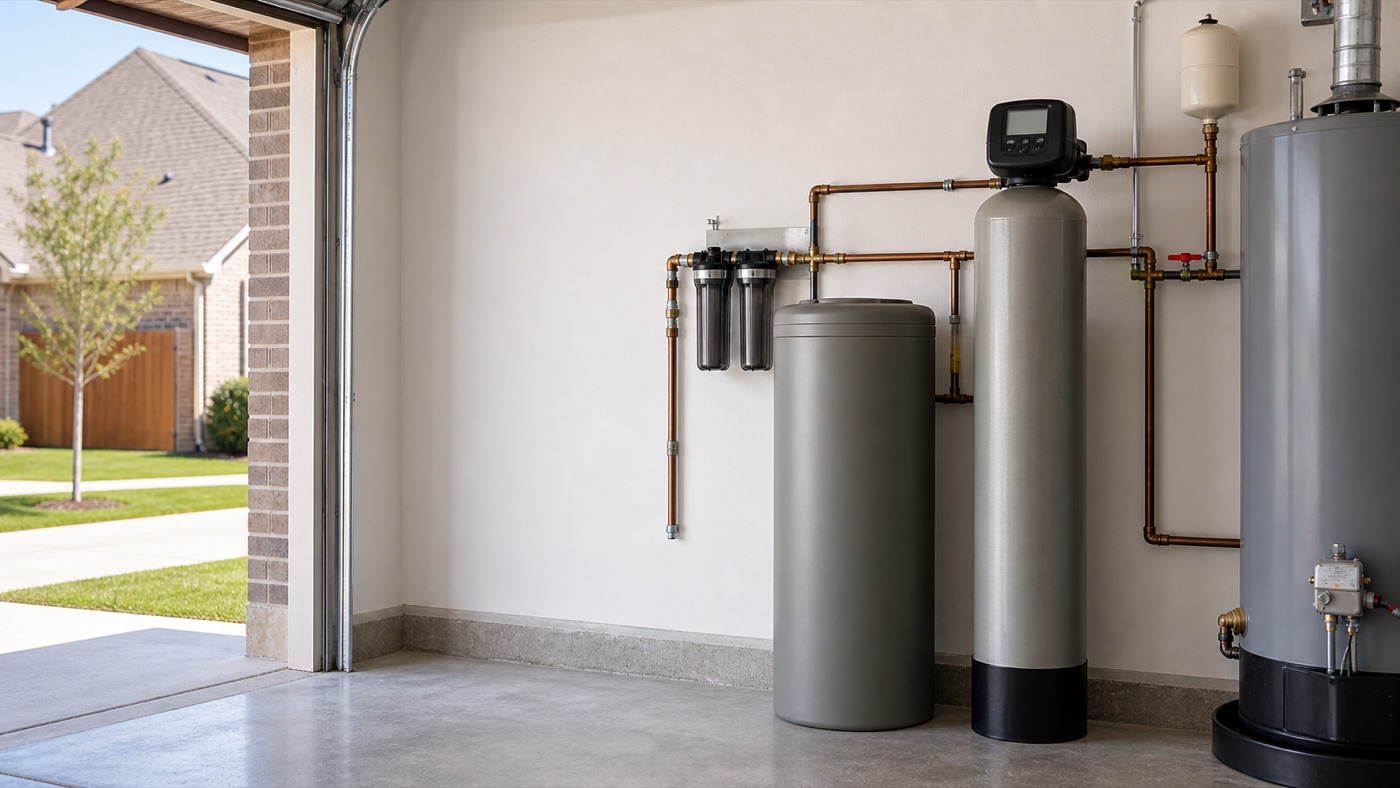
For a new or recent build, the most important first check is whether the home already has a softener loop. A loop can make installation cleaner. Without one, an installer may need to inspect the garage, main line path, drain options, and electrical access before giving a realistic quote.
Why softener quotes vary
- Home size, bathrooms, and household size affect system sizing.
- A pre-plumbed loop usually changes the scope compared with a retrofit.
- Whole-home carbon filtration and reverse osmosis add separate equipment and maintenance needs.
- Some homes need plumbing prep before equipment can be installed responsibly.
Local demand is visible in permits
Princeton permit archives include water softener installation entries, including an April 2025 permit description for "WATER SOFTENER INSTALL." That does not mean every home needs a softener, but it does show that local homeowners are actively installing systems.
Common Questions
Does Princeton water require a softener?
No public guide should claim every Princeton home requires a softener. The practical question is whether hardness-related symptoms, equipment goals, and installation cost make a softener worthwhile for your home.
What should I ask before getting a quote?
Ask whether the installer can inspect the loop, confirm drain and electrical needs, size the system from bathrooms and household size, and explain maintenance.
Is reverse osmosis the same as a water softener?
No. A softener addresses hardness minerals for the home. Reverse osmosis is usually an under-sink drinking-water system.